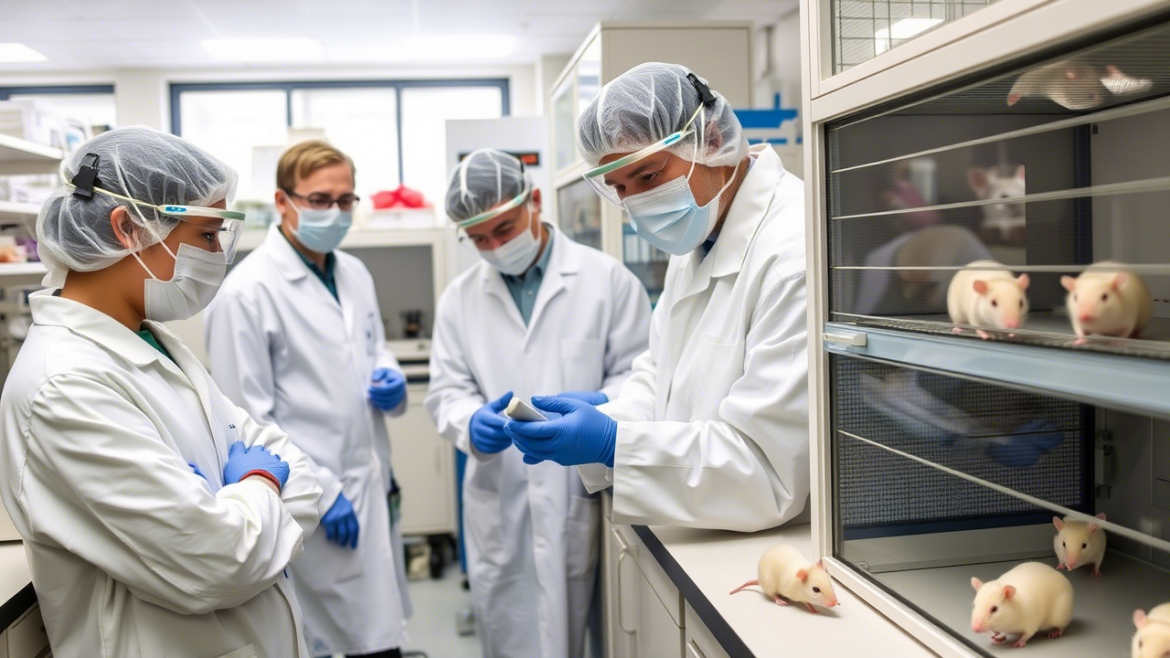
Experimental research in the life sciences uses model animals for different objectives. These organisms do not get selected lightly; rather, it is because of their distinct biological characteristics and ease of genetic manipulation, coupled with their similarity in physiology to humans, that makes them all the more important in discovering health and disease.
Let’s take a closer look at five typical model animals, discussing their particular roles in research and the peculiarities that make each of them important in the area of laboratory research.
“Without animal research, polio would still be claiming thousands of lives each year.”
— Albert Sabin, developer of the oral polio vaccine
01. Mouse – Mus musculus
The use of mice dominates the biomedical research scenario, with a rate of close to 99% of all laboratory animals in use all around the world.
Their small size, ease of breeding, and short reproductive cycles make them suitable for large-scale studies. What actually makes the mouse so special, though, is the richness of genetic detail available and the possibility of manipulating the genome.
To a wide range of human diseases, including diabetes, Alzheimer’s, some types of cancer, and rare genetic diseases, scientists refer to mice as an excellent model to study them. The genome of the mouse has been sequenced completely, and thousands of genetically engineered strains have been created, each suited to specific genes or disease pathways.
Example – To study signal transduction in cancer and inflammation, phospho-specific antibodies, e.g., against phosphorylated STAT3 at tyrosine 705, are a common practice in mouse models.
| NOTE: In laboratories, researchers intend to buy phospho antibody products in order to study such mechanisms. |
02. Rat – Rattus norvegicus
Although mice are the favorites of geneticists, rats have long been the model of choice in physiology and pharmacology, as well as behavioral neuroscience.
Their sizes are relatively large compared to mice, thus enabling them to have more complex surgical procedures and physiological recordings, such as cardiovascular and neurobiological assessments.
Several fundamental findings regarding neurotransmitters, the scientific explanation of addiction, and the formation of memory initially occurred in rats.
In the development and validation of such antibodies as the Rabbit STAT3 (pY705) antibody, cross-reactivity and reliability during preclinical studies are usually determined and confirmed using rat tissues.
03. Zebrafish – Danio rerio
Zebrafish have become a leading model in developmental biology and genetics.
Factors that contribute to it:
- Embryos are transparent, which can be observed under the optical microscope
- Embryos grow outside of the mother
- Cell movement and organ formation could be viewed in real-time by the researchers
The zebrafish genome is also effectively annotated, and simple gene editing allows for the modeling of human diseases comparatively quickly.
Zebrafish are touted as being amenable to high-throughput drug screening and the study of genetic heart, muscle, and nervous system development.
Their high rate of growth and the fact that fluorescently labeled proteins can be visualized make them the ideal medium to study signaling pathways, such as the phosphorylation-dependent pathways that are detected by the phospho-specific antibodies.
04. Fruit Fly – Drosophila melanogaster
Only a handful of organisms have provided genetics with as much information and knowledge as fruit flies.
Drosophila melanogaster has a shorter life cycle, a high rate of offspring, a small genome, and easy-to-study mutations.
Fruit flies are still irreplaceable in the analysis of genetic regulation, neurobiology, and behavior.
Although evolutionarily distant to humans, signaling pathways, even including those of the STAT proteins, are conserved in Drosophila, thus making them a rather good model to study.
05. Nematode – Caenorhabditis elegans
C.elegans is a microscopic, transparent worm whose cell lineage, as well as its nervous system, have been completely mapped.
It became the first multicellular creature to have its genome fully sequenced, and currently, it is also the only one with an entire connectome (completely mapped wiring diagram of its nervous system).
C.elegans has become a standard because of its simplicity and being genetically tractable. Researchers use it to investigate development, aging, and neurodegeneration.
It is transparent, allowing for direct visualization of cellular processes, and gene knockdown is possible using RNA interference. This model can be used to investigate molecular mechanisms because critical signaling pathways, including phosphorylation, have been conserved and thus can be used to investigate molecular processes, e.g., phospho-specific antibodies.
Conclusion: Model Animals and Molecular Tools
The most fundamental aspect of current biomedical research is the synergy between the model animals and molecular tools. As an example, the availability of validated phospho antibody reagents that work in multiple species, including mice, rats, and humans, allows this type of comparison to be made and translation of results to human biology.
A good example is the Rabbit STAT3 (pY705) Antibody, which appears in many studies, both on the signaling of cancer in mouse models and inflammation in rat tissues, and always shows reliable and reproducible results with STAT3 activation in the experiment.
To conclude, the five model animals, mouse, rat, zebrafish, fruit fly, and nematode, are all dominant enough to advance research through the discovery in experimental studies. With the advancement of molecular reagents and genetic engineering, their use is expected to continue, and they will remain at the forefront of biomedical science in future years.