Structural integrity in manufacturing industries is frequently based on welded joints. From heavy machinery to infrastructure components, welding faults may silently undermine safety, durability, and compliance. Such risks are compounded by larger production sizes or shorter production schedules where quality control becomes more important than ever.
To both manufacturers and buyers, it is important to know how the quality of welding is considered in the wider context of operational evaluation. Welding is not a single operation but a fundamental process which directly demonstrates the discipline, capability and control maturity of a factory.
Welding as a Critical Manufacturing Process
Welding is used to join materials, to transfer loads and to determine the life of most products. Minor variations in such parameters as heat input, joint preparation, or filler material choice may result in cracks, porosity, or weak joints that are hard to identify later.
Since the results of welding are highly dependent on the skill of the operator, the condition of the equipment, and the consistency of the process, it is a good indicator of the health of the manufacturing in general. A factory with poor control of the quality of welding usually encounterssame problems in other production phases.
Why Welding Requires Dedicated Inspection Focus
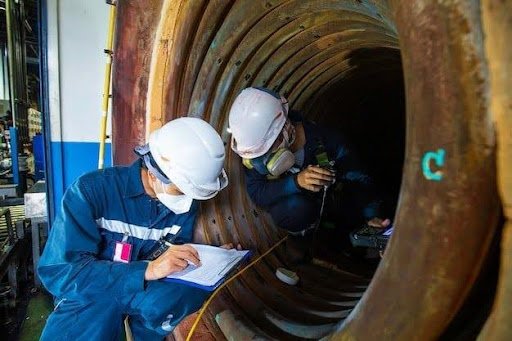
A Welding Inspection is an assessment of whether the welding activities are conducted in accordance with the stipulated technical and safety standards. It examines compliance of joint design, qualification of welder, parameter of process and visual/non-destructive test outcome to sustain integrity.
In addition to the detection of defects, this inspection ensures that the welding is done in a controlled and repeatable way. It is important that there is consistency, particularly in sectors where failure can result into safety risks or regulatory fines.
Linking Welding Quality to Process Evaluation
Welding does not occur in a vacuum of the rest of the manufacturing. The initial preparation of the material, the laying out of the fittings, the environmental temperature, and post-weld treatment also determine final quality.
This is where a Manufacturing process audit will be strategic. It looks at the way welding is integrated in the general production process, regulation of the inputs, and management of deviations. The audit will show whether the quality of welding is based on the personal experience or the use of efficient systems.
Assessing Equipment and Process Controls
Process evaluation takes a closer look at welding machines, calibration practices and maintenance routines. The typical root cause of variation in the quality of weld is equipment inconsistency, particularly following high-volume settings.
Through looking at machine capability and monitoring techniques, auditors can know whether the process is capable of delivering consistent results when operating within normal conditions.
Evaluating Workforce Competence
Human skill is very crucial in welding. Process-level reviews evaluate the training of the welders, the validity of the certification and compliance with the approved procedures.
The inconsistencies in the results of welding between shifts or operators can be the indicator of the training or supervision gaps. These gaps are not only improved to enhance the quality of welding but also the reliability of production.
Preventing Structural and Safety Failures
Welding defects may not be detected until the time when the products are in the field. Failures are then expensive and risky.
Incorporation of welding assessment in process evaluation assists in risk identification at an early stage. It makes sure that defects are eliminated at the beginning instead of being detected at the end or at delivery.
Supporting Compliance and Traceability
Various industries demand meticulous documentation of the welded parts such as the qualification of the procedures, inspection reports, and traceability of the materials.
Process-based assessment checks the validity of these records, their availability and connection to real production. Such traceability is also helpful in strengthening compliance and safeguarding manufacturers in case of audit inspections or investigations.
Enhancing Supplier Reliability and Confidence
As a buyer, one can say that the quality of welding is a good indicator of the ability of the supplier. When the welding processes are well controlled in factories, it is likely that other operations in the factories will be more disciplined.
When the performance of welding is consistent with the documented procedures and audit results, it creates trust in the capacity of the supplier to produce consistent quality at large scale.
Turning Welding Insights into Process Improvements
The real worth of welding evaluation is the use of findings. Process-level insights can be used to design specific corrective measures, e.g., a redesign of the fixtures, standardization of parameters, or skill training.
Such enhancements lower the rate of defects, rework, and improve production. In the long term, they lead to a more robust and foreseeable production process.
Conclusion
Welding is not just a technicalwork, it is a mirror of the manufacturing discipline. Assessed within a wider context of process control, it gives profound understanding of the real potential of a factory.
Companies that incorporate welding evaluation into the systematic process evaluation create less risk, enhance quality and establish more resilient supply chains. Manufacturers and buyers can attain sustainable quality by addressing the control of welding instead of merely inspecting it.