Finance events in Singapore have always reflected the city’s particular blend of institutional sophistication and retail aspiration. Conferences at Marina Bay Sands draw audiences that mix private bankers with independent traders, compliance professionals with algorithm developers, and seasoned fund managers with participants who are still building their first serious portfolio. The conversations in the corridors and at the networking tables after panel sessions have historically gravitated toward property, regional equities, and the macroeconomic outlook for Southeast Asia. Something has shifted in those informal exchanges recently, and currency trading has moved from a peripheral topic into one that appears with increasing regularity and seriousness.
The shift is partly generational. Younger finance professionals entering Singapore’s industry over the past several years have arrived with a different relationship to retail market participation than their predecessors. Where an earlier generation maintained a clean separation between professional financial work and personal investing, often out of compliance caution or simple habit, the current cohort is more likely to have developed personal trading practices that run alongside their careers. When these participants gather at industry events, the topic comes up not as a curiosity but as a shared point of reference that requires no explanation or justification.
What has changed for more senior participants is the quality of the conversation available. Discussions at finance events a decade ago tended to cluster around cautionary narratives, stories of retail losses and platform failures that reinforced the view that currency markets were not a serious arena for disciplined investors. The narratives circulating now are different. Participants are sharing systematic approaches, discussing macroeconomic frameworks for thinking about central bank divergence, and comparing broker infrastructure with the specificity of people who have done genuine due diligence. The tone has shifted from skeptical to analytical, which changes who feels comfortable joining the conversation.
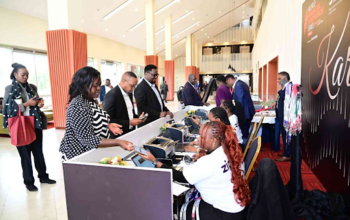
Panel programming at Singapore’s finance events has begun reflecting this interest more directly. Sessions addressing retail participation in currency markets, the regulatory landscape administered by the Monetary Authority of Singapore, and the intersection of algorithmic approaches with forex practice have appeared on conference agendas with increasing frequency. Organizers who track session attendance and audience engagement report that content on the topic draws consistently strong interest from demographics that would not have prioritized it previously, including compliance professionals curious about the regulatory evolution and technology specialists interested in the algorithmic dimensions.
The networking dynamic around currency trading at these events has its own distinct character. Unlike property or equity discussions, which tend to involve known benchmarks and shared reference points, currency trading conversations quickly become quite specific about methodology, risk management philosophy, and platform preference. That specificity functions as a filter, distinguishing participants with genuine practice from those with passing curiosity, and creates substantive exchanges that serious practitioners find worth having. The credibility threshold is higher than in more casual settings, which paradoxically makes the conversations more useful for those who clear it.
What this increasing visibility at formal finance events signals is a gradual legitimization that currency trading in Singapore has been building toward for some time. The retail market’s maturation, the regulatory framework’s development, and the accumulation of a critical mass of disciplined practitioners have collectively created the conditions under which currency trading can be discussed at professional gatherings without the defensive framing that once accompanied it. That shift in conversational register, from marginal to mainstream, is perhaps the most reliable indicator that something in the market has genuinely and durably changed.