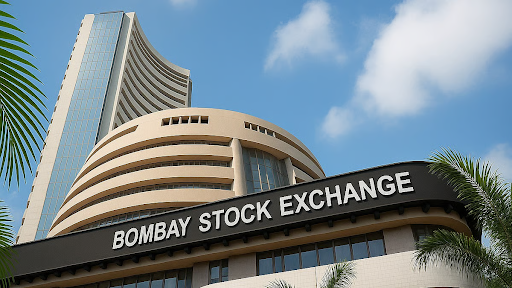
The Bombay Stock Exchange (BSE) is one of India’s most critical financial institutions, playing a significant role in shaping the country’s capital market. With a legacy that spans well over a century, the BSE holds a unique position as one of the largest and oldest stock exchanges not just in India, but the world. Its contribution to the growth, maturity, and globalization of the Indian capital market has been monumental.
Established in 1875, the Bombay Stock Exchange has evolved from a basic platform for trading shares to a sophisticated marketplace for raising capital, facilitating investments, and driving economic growth.
This article explores the historical significance, key contributions, and contemporary relevance of the Bombay Stock Exchange, along with its influence on India’s financial ecosystem and the global market.
Understanding the Bombay Stock Exchange (BSE)
The Bombay Stock Exchange, headquartered in Mumbai, is Asia’s oldest stock exchange and among the world’s ten largest exchanges by market capitalization. Initially known as The Native Share and Stock Brokers’ Association, the BSE played a foundational role when organized share trading in India was still at an early stage.
Over time, the exchange established benchmarks for transparency, accountability, and investor protection. With continuous technological upgrades, the Bombay Stock Exchange has become one of the fastest stock exchanges globally, capable of processing nearly 500,000 orders per second.
Its flagship index, the Sensex (Sensitive Index), is widely regarded as a barometer of the Indian economy, reflecting overall market sentiment and economic health.
The Backbone of India’s Capital Market
Over the decades, the BSE has emerged as a central pillar of India’s capital market. By enabling capital raising and facilitating efficient trading, the exchange supports economic development and wealth creation.
1. Encouraging Capital Formation
The Bombay Stock Exchange plays a vital role in capital formation by enabling companies to raise funds through Initial Public Offerings (IPOs), follow-on public offers, and secondary market trading. Corporates, startups, and small enterprises leverage this platform to finance growth, innovation, and expansion, contributing to industrial development and employment generation.
2. Supporting a Bull Market Environment
A bull market, characterized by rising stock prices and positive investor sentiment, is often linked to economic growth. The Bombay Stock Exchange supports bullish market cycles by ensuring transparency, technological efficiency, and strong regulatory oversight. Bull markets enhance investor wealth, boost consumer confidence, and provide businesses with the capital required for expansion.
3. S&P BSE Indices as Market Indicators
The Sensex, comprising 30 large and financially stable companies across sectors, is a globally recognized indicator of India’s stock market performance. It has reflected India’s economic cycles over time, including significant bull phases such as the 2003–2008 rally, which showcased the BSE’s role in large-scale wealth creation.
Driving Reforms and Technological Advancements
As India’s financial markets matured, the Bombay Stock Exchange continuously adapted through reforms and innovation.
1. Introduction of Electronic Trading
In 1995, the BSE transitioned from open outcry trading to a fully electronic system. This shift improved execution speed, reduced settlement risks, minimized malpractices, and expanded market access for retail investors across India.
2. Derivatives Trading
The introduction of derivatives trading in 2000 marked a significant milestone. Derivatives enabled investors to hedge risk, diversify portfolios, and manage volatility, while also attracting foreign institutional investors and increasing market depth.
3. SME Listings and Startup Initiatives
The BSE SME platform provides small and medium enterprises with access to capital markets, helping them scale operations and improve governance standards. This initiative promotes entrepreneurship and strengthens India’s economic base.
4. Investor Education and Awareness
The Bombay Stock Exchange actively promotes investor education through seminars, certification programs, and digital learning platforms. These initiatives enhance financial literacy and encourage informed participation, especially during periods of market volatility.
Key Initiatives Strengthening India’s Financial Ecosystem
1. BSE StAR MF Platform
The BSE StAR MF platform has revolutionized mutual fund transactions by offering a paperless, transparent, and efficient system. It has significantly boosted retail participation in mutual fund investments.
2. India International Exchange (INX)
Launched at Gujarat’s International Financial Services Centre (IFSC), BSE INX enables international investors to trade Indian securities. With extended trading hours and global connectivity, it strengthens India’s presence in international capital markets.
3. Sustainable and Responsible Investing
The BSE Carbonex and Greenex indices reflect the exchange’s commitment to sustainability. These indices promote environmentally responsible companies and support long-term, ethical investment practices.
The Bombay Stock Exchange on the Global Stage
The Bombay Stock Exchange actively collaborates with international exchanges and financial institutions, adopting global best practices. As a member of global bodies such as the World Federation of Exchanges, the BSE ensures regulatory alignment and investor confidence.
This global integration has facilitated increased inflows of Foreign Direct Investment (FDI) and Foreign Institutional Investment (FII), strengthening India’s capital market and economic resilience.
Challenges Faced by the Bombay Stock Exchange
Despite its achievements, the BSE faces several challenges:
- Competition from Other Exchanges, particularly the NSE, which dominates equity and derivatives trading
- Market Volatility driven by global economic events and geopolitical risks
- Regulatory and Taxation Changes impacting market sentiment
- Limited Penetration in Rural Areas due to lower financial awareness and digital access
The Road Ahead for the Bombay Stock Exchange
To remain competitive and relevant, the Bombay Stock Exchange must focus on:
- Advanced Technologies such as AI, blockchain, and machine learning
- Expanding Retail Investor Participation, especially in semi-urban and rural regions
- Promoting ESG and Sustainable Investments
- Enhancing Global Reach through international collaborations and dual listings
Conclusion
The Bombay Stock Exchange (BSE) is more than a trading platform—it is the cornerstone of India’s capital market. From facilitating capital formation and supporting bull markets to enhancing transparency and investor confidence, the BSE has played a transformative role in India’s financial journey.
As India progresses toward becoming a global economic powerhouse, the Bombay Stock Exchange will remain central to mobilizing capital, fostering innovation, and integrating Indian markets with the global financial system. Its continued focus on technology, sustainability, and investor welfare positions the BSE as a long-term driver of India’s economic growth.