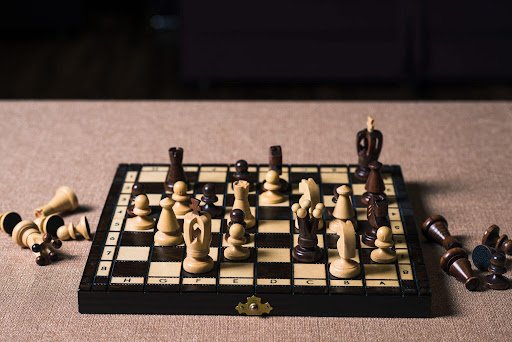
Tactical awareness is one of the most important skills in chess, especially when it comes to identifying opportunities that can quickly shift the balance of a game. Many learners explore an online chess academy to understand such patterns in a structured way and improve their decision-making during complex positions.
One of the most powerful tactical ideas in chess is the fork strategy, where a single piece creates multiple threats at the same time. Mastering this concept helps players gain a material advantage and improve overall control of the board.
Understanding the Fork Strategy
The fork strategy occurs when one piece attacks two or more opponent pieces simultaneously. Since the opponent can usually respond to only one threat, the player executing the fork often gains a material advantage or positional dominance.
A fork can be created by different pieces, such as knights, queens, pawns, and even bishops or rooks, depending on the position. Knights are especially famous for forks due to their unique movement pattern, which allows them to attack unexpected squares.
Understanding this tactic requires players to constantly scan the board for opportunities where multiple enemy pieces align in vulnerable positions.
Why Forks Are So Powerful in Chess
Forks are considered one of the most effective tactical weapons because they force the opponent into difficult decisions. Even strong players can struggle to defend against well-executed forks when they are not carefully calculated.
The strength of a fork lies in its ability to create imbalance. By attacking multiple targets at once, a player can win material or disrupt the opponent’s coordination. This often leads to long-term advantages that can decide the outcome of the game.
Developing Tactical Awareness for Fork Opportunities
Recognizing fork opportunities requires consistent training and strong board vision. Players must develop the habit of evaluating every position for tactical possibilities before making a move.
1. Pattern Recognition
Pattern recognition is essential for identifying forks quickly during a game.
- Players learn to recognize common piece arrangements that lead to fork opportunities, especially knight forks near the center of the board.
- Regular practice helps the brain automatically detect tactical setups without needing deep calculation every time.
- Strong pattern recognition reduces the chance of missing winning opportunities during fast-paced games.
2. Board Visualization
Visualization helps players predict how pieces interact across the board.
- Players train themselves to imagine future positions after several moves, which helps in spotting hidden forks.
- Strong visualization skills make it easier to see threats that are not immediately visible on the board.
- This ability improves overall tactical accuracy and reduces blunders in complex positions.
3. Calculation Skills
Accurate calculation is necessary to confirm whether a fork is truly effective.
- Players analyze multiple move sequences to determine if the fork leads to material gain or positional advantage.
- Careful calculation ensures that the opponent does not have a counterattack that neutralizes the tactic.
- Strong calculation skills support better decision-making in both tactical and strategic situations.
4. Practical Game Awareness
Awareness during actual gameplay is crucial for applying fork tactics successfully.
- Players learn to stay alert throughout the game, especially when pieces become loosely defended.
- Maintaining focus helps identify tactical chances that appear suddenly during mid-game transitions.
- Game awareness improves consistency in converting winning positions into actual victories.
Applying Fork Strategy in Real Games
In real gameplay, forks often appear when players are actively attacking or defending key positions. Knights are commonly used to execute forks because they can jump over pieces and create unexpected threats.
Queens also play an important role in fork tactics due to their wide range of movement. A queen fork can target both major and minor pieces simultaneously, often leading to significant material advantage.
Successful application of the fork strategy requires timing, accuracy, and a deep understanding of piece coordination. Players must also ensure that the fork does not expose their own position to counterattacks.
Training Methods to Master Fork Tactics
Improving fork tactics requires structured practice and consistent exposure to tactical positions. Many learners benefit from guided lessons in an online chess academy, where training is designed to strengthen tactical awareness step by step.
- Solving tactical puzzles regularly helps players recognize fork patterns faster during real games. These exercises improve calculation speed and accuracy over time.
- Reviewing master games allows learners to observe how experienced players use forks in practical situations. This builds a deeper understanding of tactical execution.
- Practicing timed exercises helps players apply fork tactics under pressure, improving decision-making speed.
- Analyzing personal games helps identify missed fork opportunities and correct recurring mistakes.
Common Mistakes When Using Forks
While forks are powerful, players often make mistakes when trying to execute them without proper evaluation.
- One common error is missing opponent counter-threats that can neutralize the fork or lead to material loss.
- Another mistake is forcing a fork without proper calculation, resulting in weak positions instead of advantage.
- Players sometimes focus too much on tactical ideas and ignore positional consequences, which can weaken their overall game.
- Lack of awareness often leads to missed defensive forks, where players fail to protect multiple pieces effectively.
Conclusion
Mastering the fork strategy is a key step toward becoming a stronger and more confident chess player, as it directly improves tactical awareness, calculation skills, and decision-making under pressure. Players who consistently practice these ideas are better equipped to spot winning opportunities and convert advantages into victories with greater precision.
For learners who want structured guidance and expert-driven improvement, Chessbrainz stands out as a dedicated platform offering high-quality online chess training designed to strengthen tactical thinking and overall game performance. With well-planned lessons, interactive learning methods, and a focus on real-game application, Chessbrainz provides an engaging environment where players can steadily refine their skills and build long-term competitive strength through a reliable online chess academy experience.
For More Info Visit:- regulararticles.com