In recent years, the field of veterinary medicine has seen significant advancements, particularly in diagnostic imaging technologies. These innovations have made it possible to diagnose and treat pet health issues with greater accuracy and speed than ever before. When your pet faces a health challenge, selecting the most appropriate imaging service can be crucial to their care. Pet owners often have questions about how these imaging services work and what benefits they offer.
In this context, understanding the role of veterinary radiology becomes essential. This specialized field employs various imaging techniques to help veterinarians diagnose and monitor conditions in pets. From X-rays to MRI scans, each method offers unique insights into the health of animals, allowing for more precise treatment plans.
The Range of Diagnostic Imaging Techniques
Veterinary imaging services encompass several technologies, each serving different diagnostic purposes. Commonly used methods include:
- X-rays: Often the first step in diagnosing fractures or internal injuries, X-rays provide a quick overview of skeletal structures and certain organs.
- Ultrasound: This technique uses sound waves to create images of soft tissues, making it invaluable for examining the heart, kidneys, liver, and other organs.
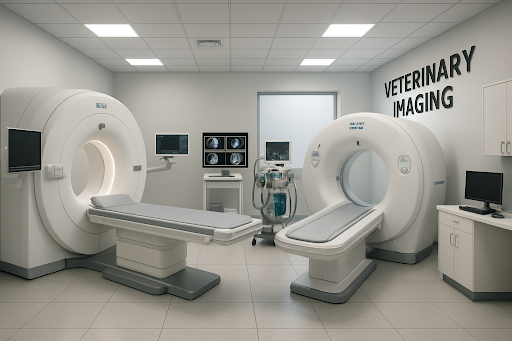
- MRI (Magnetic Resonance Imaging): Particularly useful for detailed images of soft tissues, the brain, and spinal cord, MRI scans are critical for diagnosing neurological conditions.
- CT Scans (Computed Tomography): Offering detailed cross-sectional images, CT scans are excellent for assessing complex fractures and detecting tumors.
Each of these technologies plays a vital role in a veterinary imaging center, where the goal is to provide comprehensive diagnostic services tailored to the needs of each pet.
Benefits of Advanced Imaging for Pets
Access to advanced imaging technologies has transformed veterinary care. Here are some of the key benefits:
- Early Detection of Diseases: Imaging allows for the early detection of diseases, which can lead to more effective treatment and improved outcomes. For instance, detecting a tumor at an early stage can significantly enhance the chances of successful intervention.
- Precision in Diagnosis: With high-resolution images, veterinarians can make more accurate diagnoses, reducing the need for exploratory surgeries and minimizing stress for the pet.
- Treatment Monitoring: Imaging is not only used for initial diagnosis but also for monitoring the effectiveness of treatments over time. This ensures that any adjustments to the treatment plan are based on the most current and accurate information.
- Non-invasive Approach: Many imaging techniques are non-invasive, which means they pose minimal risk to the animal. This is especially important for pets that may not be healthy enough for more invasive diagnostic procedures.
Choosing the Right Imaging Service
Selecting the appropriate imaging service for your pet involves considering several factors:
- Veterinary Expertise: Ensure that the veterinary imaging center you choose is staffed by qualified professionals who are experienced in using advanced imaging technologies.
- Specific Needs: Different conditions require different imaging techniques. Discuss with your veterinarian which method is best suited for your pet’s condition.
- Technology Availability: Verify that the imaging center is equipped with the latest technology. Older equipment might not provide the level of detail needed for accurate diagnosis.
- Cost and Insurance: Advanced imaging can be expensive. Check whether your pet insurance covers imaging services and discuss any financial concerns with the imaging center.
Real-World Applications and Success Stories
To illustrate the impact of advanced imaging, consider the case of a middle-aged Golden Retriever named Max. Max was experiencing unexplained lameness in his hind legs. Initial examinations did not reveal any abnormalities, so his veterinarian recommended an MRI scan. This imaging technique uncovered a herniated disc pressing on Max’s spinal cord, a condition that would have been difficult to diagnose without such detailed imaging. Following surgery, Max made a full recovery, highlighting the critical role of advanced imaging in effective veterinary care.
Future Trends in Veterinary Imaging
As technology continues to evolve, so too does the potential for innovative imaging techniques in veterinary medicine. Emerging trends include the use of 3D imaging for more detailed anatomical studies and the integration of artificial intelligence to enhance image analysis. These advancements promise to further improve diagnostic accuracy and treatment outcomes, providing a brighter future for pet healthcare.
Conclusion
The choice of imaging services plays a pivotal role in the health and well-being of pets. By understanding the different imaging techniques and their applications, pet owners can make informed decisions that align with their pet’s specific needs. As technology advances, the capabilities of imaging will continue to expand, offering even more precise and effective diagnostic solutions. If you’re considering advanced imaging for your pet, consult with your veterinarian to explore the best options available.