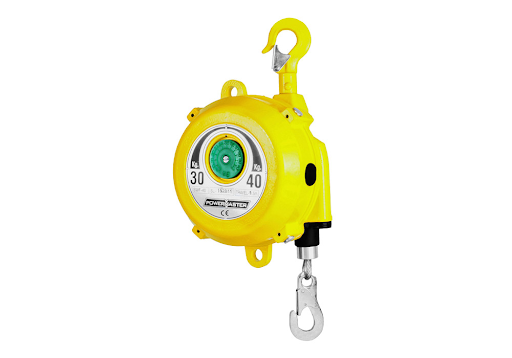
Heavy hand tools can slow down work speed and increase operator strain during long production hours. Repeated lifting also affects accuracy, safety, and comfort on assembly lines. This is why many factories now use a load balancer to support suspended tools and improve movement control.
A load balancer helps reduce the effort needed to lift and position industrial tools. It creates a near weightless feel for the operator. This improves handling and lowers physical stress during daily work. Industries that use welding guns, torque wrenches, and air tools often depend on these systems for stable tool movement and safer operations.
What Is a Load Balancer?
A load balancer is a spring-based suspension device that holds industrial tools in a balanced position. It allows workers to move heavy tools up and down with less force. The system uses a steel cable, spring tension, and drum mechanism to support tool weight. The operator can pull the tool downward and release it smoothly after use. These devices are common in automotive plants, fabrication shops, and production units where workers use tools repeatedly throughout the day.
How a Load Balancer Function
The internal spring stores energy while supporting the attached tool weight. When the operator pulls the tool down, the cable extends smoothly. Once released, the spring retracts the cable and returns the tool to its set position. Most modern systems include a tapered cable drum for even tension during movement. This helps maintain smooth operation across the full cable range.
Many units also feature external tension adjustment. This allows quick balancing based on tool weight. A swivel top hook supports flexible positioning during work. Safety remains a major part of the design. Enclosed bodies help prevent finger injuries. Drum lock systems support easier tool replacement. Safety lock pins stop sudden cable movement during spring failure.
Where Load Balancers Are Used
Load balancers support many industrial tasks where heavy tools stay in constant use.
Common applications include:
- Automotive assembly lines
- Welding stations
- Pneumatic tool handling
- Electric torque wrench support
- Manufacturing and fabrication plants
Many operators also search for the best tube tools for purchase when setting up balanced production systems. Proper suspension improves tool control and reduces handling pressure during precision work.
Key Features of Modern Load Balancers
Modern load balancers focus on both operator safety and work speed.
Important features include:
- Lightweight aluminum alloy housing
- Forged steel suspension hooks
- Smooth cable tension control
- 360-degree swivel movement
- Safety wire arrest systems
- Wide load handling capacity
Different series support different weight ranges. Some units handle small precision tools, while others support loads up to 200 kg.
Conclusion
Load balancers improve comfort, control, and safety in industrial workspaces. They help workers manage heavy tools with less effort while improving production flow. Powermaster Engineers Private Limited, featured on Powermaster Ltd., manufactures high-precision spring and load balancers designed for industrial use across automotive and manufacturing sectors. Their systems support safer handling, smooth tension control, and reliable long-term performance in demanding work environments.