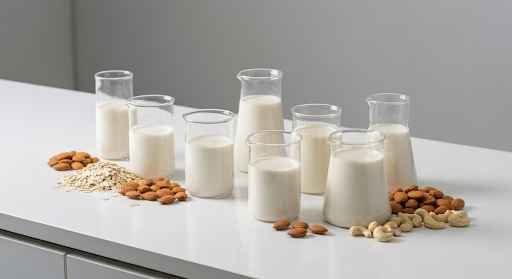
The plant-based beverage market has grown significantly over the past decade, and the science behind it has grown just as fast. Brands entering this space quickly discover that crafting a shelf-stable, great-tasting milk alternative is far more complex than blending oats with water. That is where skilled plant-based milk recipe developers become a critical part of the process, bringing technical knowledge that bridges food science and consumer expectations.
What Plant-Based Milk Developers Actually Do
Plant-based milk developers are food scientists who specialize in formulating non-dairy beverages from ingredients like oats, almonds, soy, peas, hemp, and cashews. Their work goes well beyond basic recipe creation.
They are responsible for:
- Selecting the right protein and fat ratios for mouthfeel and nutrition
- Developing emulsification systems to prevent separation
- Optimizing pH levels for stability during heat processing
- Identifying clean-label alternatives to synthetic stabilizers
- Ensuring the final product meets regulatory labeling requirements
Each of these tasks requires a working knowledge of food chemistry, ingredient interactions, and processing equipment behavior.
Why Formulation Is More Difficult Than It Looks
A common misconception is that plant-based milks are simple products. In reality, they present some of the more technically demanding formulation challenges in the food industry.
Plant proteins behave very differently from dairy proteins. They can cause off-flavors, sediment, or foam under certain processing conditions. Getting a product that tastes neutral, pours cleanly, and froths well in coffee requires careful ingredient selection and multiple rounds of bench testing.
Texture is another major hurdle. Consumers expect a creamy consistency, but achieving that without dairy fat means relying on hydrocolloids, starches, or specific lipid blends. Too much of any one ingredient can make the product gummy, chalky, or overly thick.
The Role of Processing in Product Stability
Formulation does not happen in isolation. The way a plant-based milk is processed — whether through high-temperature short-time (HTST) pasteurization, ultra-high temperature (UHT) treatment, or homogenization — directly affects how the final formula needs to be built.
A developer working on a UHT product must account for the impact of extreme heat on protein structure and flavor compounds. Ingredients that work perfectly at pasteurization temperatures may break down or generate off-notes under UHT conditions.
This is why experienced developers test their formulas across the full production process, not just at the bench. Real-world pilot runs reveal stability issues, separation tendencies, and flavor changes that lab testing alone cannot predict.
Clean Label and Nutrition Considerations
Consumer demand in 2026 continues to push toward shorter ingredient lists and recognizable components. Plant-based milk developers must balance this expectation against the functional reality that some ingredients exist specifically to hold the product together.
Fortification is another layer of complexity. Many plant-based milks are expected to deliver calcium, vitamin D, and B12 at levels comparable to cow’s milk. Adding these nutrients without affecting flavor, color, or stability requires precise technical knowledge.
Developers also navigate allergen management carefully. Almond, soy, and cashew-based products carry significant allergen labeling obligations, and cross-contact risks must be addressed during both formulation and manufacturing planning.
When Brands Benefit From Hiring a Specialist
Startups and established food companies alike often reach a point where internal teams lack the specific expertise needed to move a plant-based milk from concept to commercial production. Bringing in a specialist developer can shorten timelines, reduce costly reformulation cycles, and help avoid regulatory missteps.
A qualified developer also brings familiarity with ingredient suppliers, co-manufacturers, and testing labs — connections that can accelerate the path to launch.
Conclusion
Plant-based milk development is a discipline that sits at the intersection of food chemistry, consumer behavior, and manufacturing science. Understanding what these specialists contribute helps brands make smarter decisions about when and how to bring that expertise into their product development process.