Modern research laboratories are under constant pressure to detect ever-smaller quantities of biomarkers with greater accuracy and reliability. Traditional colorimetric methods sometimes fall short when a sample contains only trace amounts of a target protein, and repeated dilutions can introduce variability that undermines a study’s results. This is where chemiluminescence-based detection has become a valuable addition to the immunoassay toolkit, offering a level of sensitivity that many labs now consider essential for demanding quantitative work.
What Is a Chemiluminescent Immunoassay?
A chemiluminescent immunoassay works on the same basic antibody-antigen principle as a standard ELISA, but the signal is generated differently. Instead of a color change measured by absorbance, the enzyme label reacts with a luminescent substrate to produce light. A luminometer then measures the emitted photons, and the intensity of that light corresponds directly to the amount of target analyte present in the sample.
Because light emission can be measured against extremely low background noise, this detection method routinely picks up analytes at picogram-per-milliliter concentrations, a level of sensitivity that is difficult to achieve with absorbance-based readouts alone.
Why Researchers Are Turning to This Detection Method
Several practical advantages explain the growing interest in luminescence-based testing among research teams:
- A broader dynamic range, allowing accurate quantification across a wider concentration span without repeated sample dilutions
- Lower sample volume requirements, which matters when working with limited serum, plasma, or tissue lysate
- Reduced background interference compared with some colorimetric formats, improving signal clarity
- Compatibility with automated plate readers and higher-throughput workflows
These features make the format especially attractive for labs running large sample cohorts, longitudinal studies, or projects working with precious, hard-to-replace specimens where every microliter counts.
What is Inside a Chemiluminescent Immunoassay (CLIA) Kit?
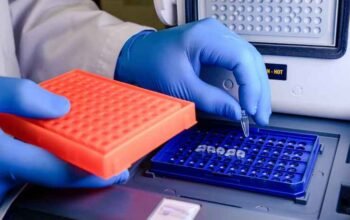
Chemiluminescent Immunoassay (CLIA) kits include a microplate pre-coated with a capture antibody specific to the target protein, along with a detection antibody conjugated to an enzyme such as horseradish peroxidase. Researchers add diluted sample to the wells, allow the sandwich complex to form, wash away unbound material, and then introduce the luminescent substrate before reading the plate on a luminometer.
Most kits also supply calibrated standards and control samples so a standard curve can be generated for accurate quantification, along with detailed protocols covering incubation times, recommended sample dilution ratios, and plate-washing steps. Reviewing this documentation before beginning bench work helps avoid avoidable errors during the assay run.
Where This Format Is Used in Research?
Chemiluminescence-based testing supports work across a wide range of research disciplines, including:
- Oncology research, where low-abundance tumor markers need reliable, repeatable quantification
- Endocrinology studies measuring hormones such as thyroid-stimulating hormone or insulin-like growth factors
- Cardiovascular research involving cardiac troponins and natriuretic peptides
- Bone metabolism studies tracking collagen turnover and osteocalcin markers
- Neuroscience projects examining glial and neuronal injury markers such as GFAP and NSE
Because the underlying antibody pairs are validated against specific species, researchers can select kits matched to human, mouse, rat, or other model organism samples depending on their experimental design and the animal model used in the study.
How to Select a High-Sensitivity Immunoassay for Your Study?
Not every project needs the added sensitivity of chemiluminescence. For analytes present in moderate-to-high concentrations, a standard colorimetric ELISA may be perfectly adequate and more cost-effective for routine screening. However, when a target protein is expected in low abundance, when sample volume is genuinely limited, or when a wider quantification range is needed across a diverse sample set, this format is often the better technical fit.
Before starting a study, it helps to review the validation data provided with each kit, including the stated sensitivity limit, cross-reactivity testing against related proteins, and intra- and inter-assay precision figures. Confirming that the antibody pair has been tested against the exact species and sample type planned for the experiment, whether that is serum, plasma, cell culture supernatant, or tissue homogenate, can save considerable time and reagent cost later in the project.
Chemiluminescence-based testing has become a dependable option wherever researchers need precise, low-abundance biomarker data without compromising on throughput. Reviewing kit specifications, species reactivity, and validation reports carefully before use, resources typically available through supplier product datasheets, helps ensure the chosen assay genuinely matches the demands of the study rather than being selected on convenience alone.