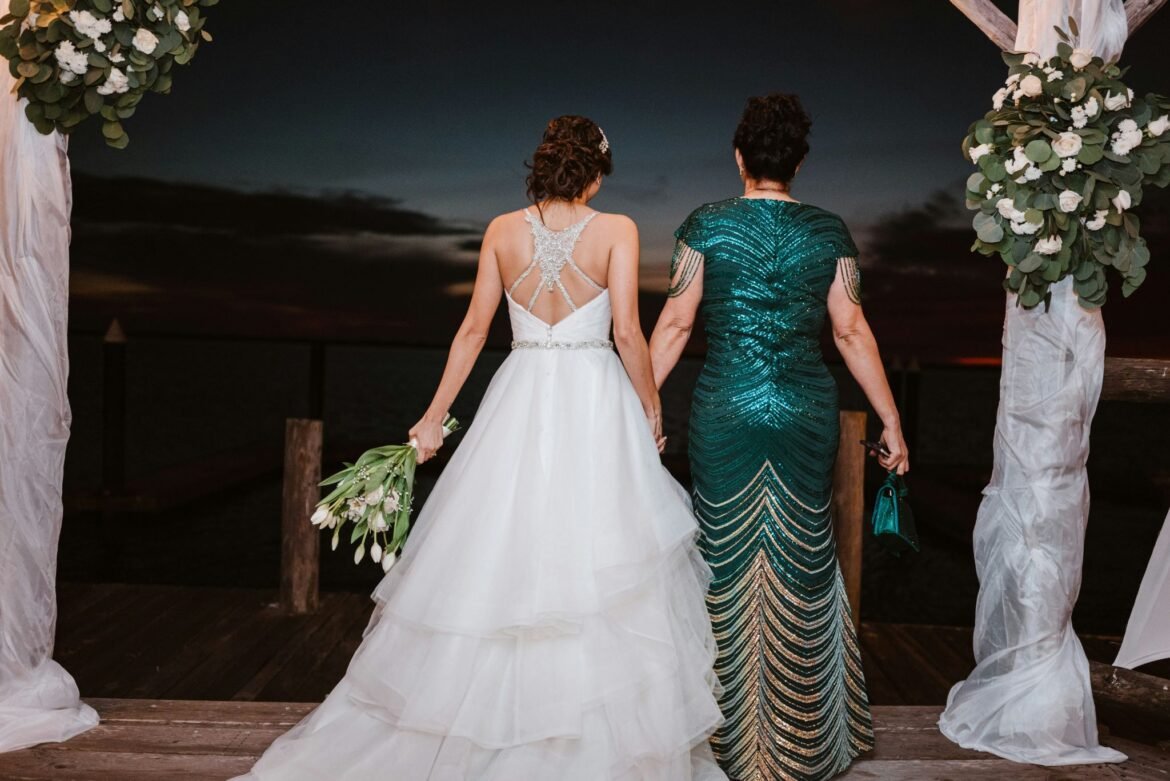
Shopping for the mother of the bride role comes with its own particular pressure, since the dress needs to feel elegant and appropriately formal without pulling visual focus away from the bride herself. That balancing act is exactly why top designer mother of the bride dresses tend to prioritize refined tailoring and quality fabric over anything too bold or attention-grabbing, and understanding what separates a genuinely well-chosen gown from a merely adequate one helps take some of the pressure out of what can otherwise feel like a stressful shopping experience layered on top of an already busy wedding season.
Coordinating Without Matching Exactly
A common early question is how closely a mother of the bride dress should coordinate with the wedding’s overall color palette, and the general guidance is complementary rather than identical, avoiding both a jarring clash and an outfit that looks like it’s trying to blend into the bridal party. Checking in with the couple about the wedding’s color scheme before shopping helps avoid an awkward mismatch discovered too late.
Browsing a curated selection of top designer mother of the bride dresses makes this coordination easier, since designer collections are often organized by color family, allowing for quick comparison against a wedding’s specific palette.
Silhouettes That Flatter Without Overwhelming
- A-line and sheath silhouettes that offer structure without excessive volume.
- Tailored jackets or wraps that add formality while allowing flexibility through the day.
- Fabric with enough structure to hold its shape through hours of standing and photos.
- A hemline length appropriate to the wedding’s formality and venue.
Choosing Fabric for All-Day Comfort
A wedding day involves hours of standing, walking, and sitting, so fabric that breathes and moves comfortably matters just as much as how a dress looks in a single photograph. Structured but breathable fabrics like crepe or a lightweight jacquard tend to hold their shape through a long day better than stiffer, less forgiving materials.
Considering the Venue and Season Together
An outdoor summer wedding calls for a noticeably different fabric weight and sleeve length than a formal indoor evening reception in cooler months, and factoring both venue and season into the decision early narrows the search considerably. A gown perfectly suited to one setting can feel genuinely out of place in another, even if the formality level is similar.
Balancing Formality With Personal Style
While the occasion calls for a certain baseline of formality, there’s still meaningful room for personal style within that framework, whether through color choice, a subtle embellishment detail, or a flattering silhouette that feels authentically like the wearer. Losing personal style entirely in pursuit of appropriate formality often leaves a mother of the bride feeling less confident on the actual day.
Planning Alterations Well Ahead of Time
Scheduling a fitting several weeks before the wedding, rather than assuming a dress will fit perfectly off the rack, allows time for the kind of precise tailoring that makes a genuine difference in how polished a designer gown ultimately looks. Waiting too close to the wedding date limits both alteration availability and the flexibility to make more significant adjustments if needed.
Working With a Stylist for a Second Opinion
Many mothers of the bride find it genuinely helpful to bring a trusted friend or work with a bridal stylist during the shopping process, since an outside perspective can offer honest feedback on fit and formality that’s harder to judge alone in a fitting room mirror. This kind of outside input often catches small issues, like a hemline that needs adjusting, before they become a bigger concern closer to the wedding date.
Reviewing Photography Plans Ahead of Time
Understanding roughly how much formal photography is planned, and whether the mother of the bride will be featured prominently in family portraits, can influence decisions around color saturation and fabric texture that photograph particularly well. A dress that looks lovely in person can occasionally read differently under professional photography lighting, making this worth a bit of upfront thought.
Final Thoughts
Choosing among top designer mother of the bride dresses comes down to balancing coordination, comfort, and personal style within the formality the occasion calls for. Taking the time to shop thoughtfully, with the venue, season, and wedding palette all in mind, leads to a gown that feels both appropriate and genuinely confidence-building on the day itself.