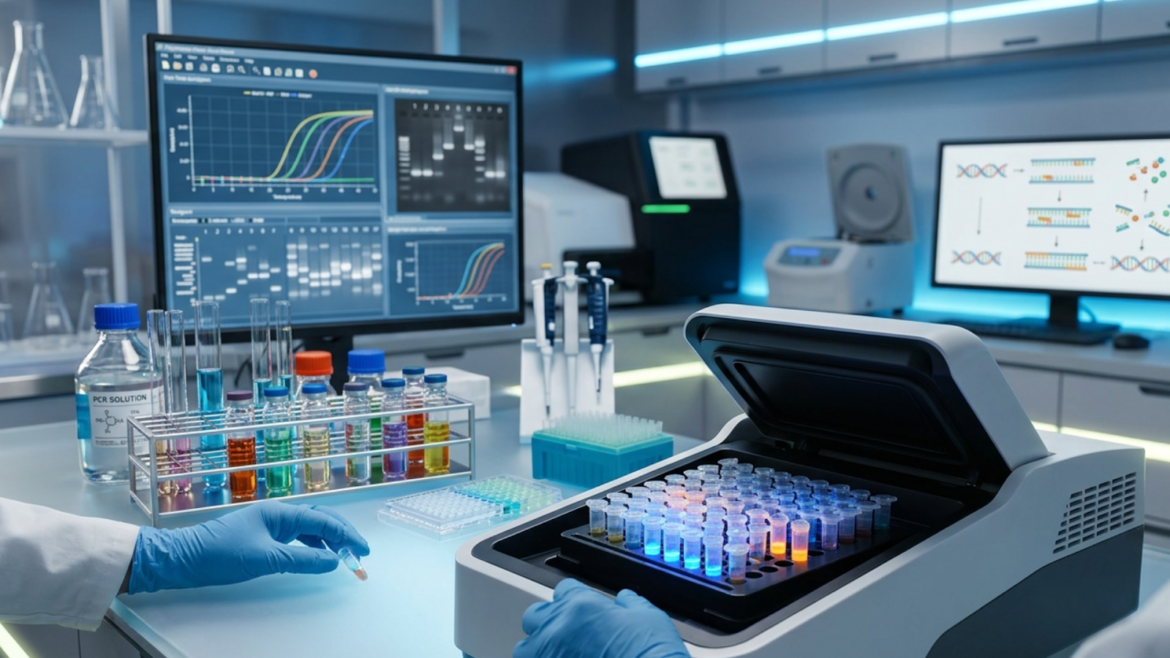
The field of molecular biology has undergone a significant transformation since the inception of the Polymerase Chain Reaction (PCR) technology. This laboratory technique, designed to amplify specific segments of DNA, has become the cornerstone of modern genetics, forensics, and clinical diagnostics. As research demands increase in complexity, the necessity for high-quality reagents and standardized protocols becomes paramount. Selecting a reliable PCR solution Kit provider like MyBioSource is no longer merely a logistical decision but a fundamental requirement for ensuring experimental reproducibility and data integrity.
The Mechanism of Polymerase Chain Reaction
At its core, PCR mimics the natural process of DNA replication but performs it within a controlled environment. The process relies on thermal cycling, which involves exposing the reaction mixture to repeated cycles of heating and cooling. These temperature shifts facilitate three primary stages: denaturation, annealing, and extension. During denaturation, the double stranded DNA template is separated into single strands at high temperatures. Subsequently, the temperature is lowered to allow primers to bind to their complementary sequences on the single stranded DNA. Finally, a heat stable DNA polymerase synthesizes a new DNA strand by adding nucleotides to the primers.
The efficiency of this process is highly dependent on the quality of the components involved. If the polymerase lacks sufficient thermostability or if the buffer concentration is suboptimal, the amplification process may yield non-specific products or fail entirely. This is why researchers often seek out specialized manufacturers to provide pre-optimized reagents that minimize the risk of human error during preparation.
Challenges in Modern Molecular Diagnostics
As molecular techniques move from basic research into clinical applications, the margin for error narrows significantly. Diagnostic assays must demonstrate high sensitivity and specificity to detect low abundance targets, such as viral RNA in early stage infections or rare genetic mutations in oncology samples. One of the most prevalent issues in the laboratory setting is the presence of inhibitors. Substances such as heme, heparin, or humic acids can interfere with the activity of the DNA polymerase, leading to false negative results.
To combat these challenges, the industry has seen a shift toward the use of master mixes and lyophilized reagents. These formats reduce the number of pipetting steps, thereby decreasing the likelihood of cross contamination. A professional PCR solution Kit provider ensures that every component, from the dNTPs to the specialized buffers, is tested for purity and performance consistency. This rigorous quality control is essential for laboratories that must adhere to stringent regulatory standards.
Innovations in PCR Technology
While traditional PCR remains a vital tool, several variations have emerged to address specific research needs. Quantitative PCR (qPCR), also known as real time PCR, allows for the monitoring of DNA amplification as it occurs. By utilizing fluorescent dyes or probes, researchers can quantify the initial amount of target DNA with high precision. This has become the gold standard for gene expression analysis and pathogen quantification.
Another significant advancement is Digital PCR (dPCR). This method partitions the sample into thousands of individual reactions, allowing for absolute quantification without the need for a standard curve. This level of precision is particularly useful for detecting rare alleles or copy number variations that might be missed by conventional methods.
Furthermore, the development of Reverse Transcription PCR (RT-PCR) has enabled the study of RNA. By using a reverse transcriptase enzyme to convert RNA into complementary DNA (cDNA), scientists can apply PCR techniques to analyze the transcriptome. This application is critical in the study of retroviruses and the monitoring of cellular responses to environmental stimuli.
Selecting the Appropriate Reagent Systems
The success of any molecular assay begins with the selection of the right tools. A laboratory must evaluate its specific needs, including the nature of the template, the expected yield, and the downstream applications. For instance, high fidelity polymerases are required when the amplified DNA is intended for cloning or sequencing, as these enzymes possess proofreading capabilities that correct misincorporated nucleotides. Conversely, for simple screening assays, a standard Taq polymerase may suffice.
Integration of specialized kits into laboratory workflows can significantly streamline operations. Modern kits are often designed to be compatible with various thermal cyclers and automated liquid handling systems. By sourcing materials from an established PCR solution Kit provider, researchers gain access to technical support and validated protocols that can save months of optimization time.
Conclusion
The evolution of PCR technology continues to push the boundaries of what is possible in biological research and medical diagnostics. However, the sophistication of these methods requires a corresponding level of quality in the reagents used. Achieving reproducible results demands a commitment to precision, from the initial design of the primers to the final analysis of the data. By utilizing professional grade kits and maintaining a deep understanding of the underlying biochemical principles, the scientific community can ensure that molecular findings remain robust and reliable. As we look toward the future of personalized medicine and advanced genomic surveillance, the role of high quality PCR solutions will only continue to grow in importance.