Fouling costs industrialized economies an estimated 0.25% of its GDP, and plant maintenance teams feel that cost long before economists do. When thick buildup coats the inside of boilers and heating equipment, they stop working well and often have to be shut down for expensive repairs. Many teams now turn to pneumatic cleaning tools, which use compressed air to drive a spinning cleaning head through each tube. The real challenge is choosing the right machine, because tube sizes, air supply, and deposit types vary from one plant to the next. This guide explains how these tools work, where plants use them, what to ask your equipment suppliers before you buy, and how to keep your tools running longer.
Where do plants use pneumatic cleaning tools?
A pneumatic tube cleaner uses compressed air to spin a brush on the end of a flexible shaft. As the brush moves down the tube, it scrubs off rust, sludge, and stubborn mineral buildup. You can easily adjust speed and power based on how tough the grime is.
Any plant with tubes has a cleaning problem. Boilers scale, condensers foul, and heat exchangers clog. It’s a problem that crops up at oil and gas sites, petrochemicals, steel mills, fertilizer plants, cement works, and sugar mills. The tubes vary in size and material, but the job is the same: remove deposits before they start to damage performance.
How Does a Pneumatic Tube Cleaner Work?
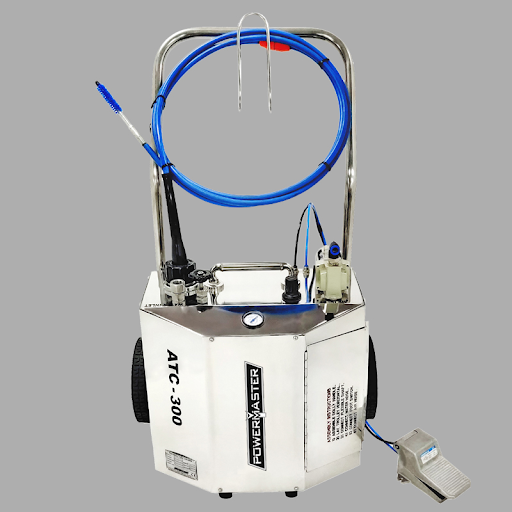
The cleaning tool sits on the tip of a flexible shaft. Shafts come in different lengths and diameters, so you can match one to your tube size. The operator feeds the spinning shaft through the tube. Water runs through the shaft casing and flushes out the deposits as they loosen. A foot pedal controls rotation and water flow, keeping both hands free to guide the shaft.
What Should You Check Before Buying From Tube Cleaning Machine Manufacturers?
Not every machine fits every job. Ask tube cleaning machine manufacturers these questions first:
- Tube size range: Does the machine handle your smallest and largest tubes?
- Speed control: Can you adjust speed and torque for different deposits?
- Air supply: Can your compressor deliver the air the tool needs?
- Air treatment: Does the kit include a filter, regulator, and lubricator?
- Portability: Do you need a heavy-duty unit for the workshop or a portable one for field work?
- Delivery: How fast can they ship to your site?
How Can You Get More Life From Your Tools?
A little care goes a long way. Pneumatic cleaning tools last longer when you maintain the air supply, shaft, and cleaning head. These habits take only a few minutes.
- Clean on a schedule: Do not wait for a breakdown. Regular cleaning stops deposits from building into hard scales.
- Care for the air line: Keep the air filter and lubricator in good shape. Clean, oiled air protects the moving parts.
- Match the settings to the job: Adjust the speed and torque to fit the deposit. Forcing the wrong setting wears the tool and the tube.
- Inspect before each job: Check shafts and cleaning heads for wear. Replace worn parts before they damage a tube.
- Store tools with care: Keep them in a dry box after use. A storage box also keeps small parts together.
Where Can You Find Reliable Pneumatic Cleaning Tools?
Tube Cleaners supplies pneumatic cleaning tools for industrial plants, including the extra-heavy-duty ATC-300 machine, the portable ATC-100, and a pneumatic tube cleaner gun. They also stock accessories. As a tube cleaning machine manufacturer, they serve the oil and gas, steel, cement, and other industries. They ship to over 140 countries and offer free shipping across the USA. Explore the full range at Tube Cleaners.