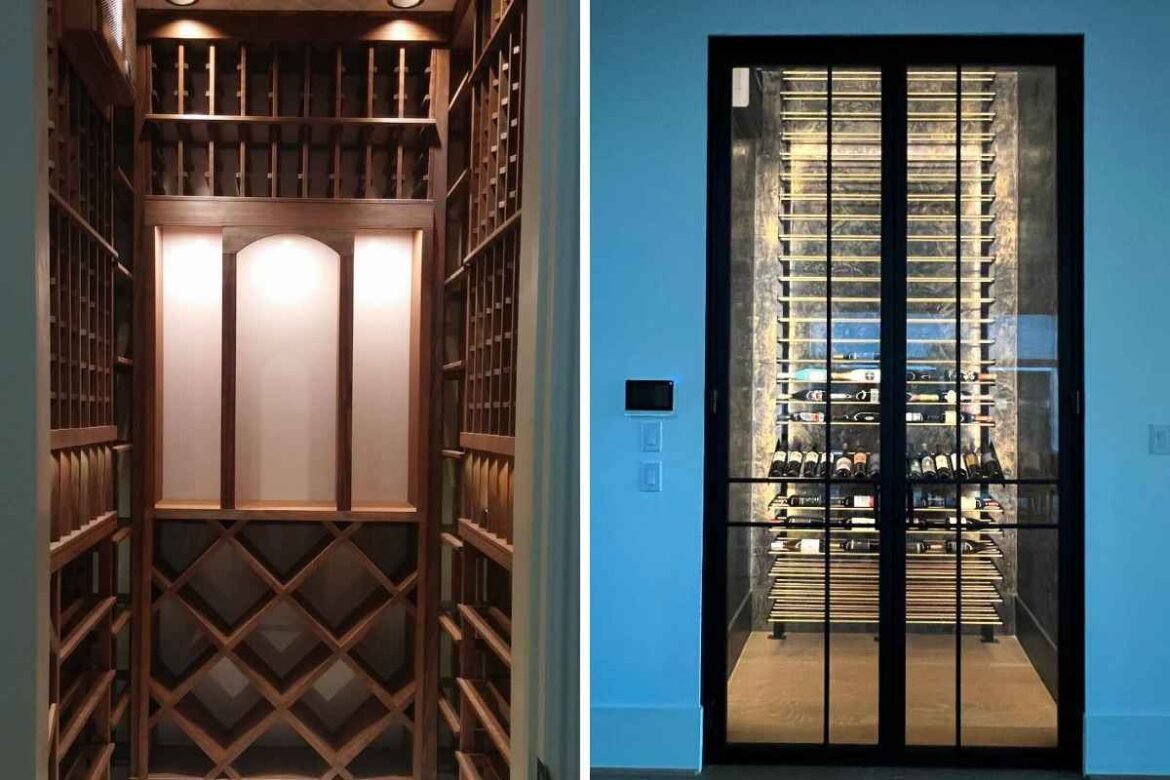
A specific kind of magic happens when you pair the warmth of a forest with the cold strength of a forge. In the world of interior design, particularly within the specialized niche of wine storage, this pair is named modern industrial. It’s a style that shuns the stuffy, subterranean basements of the past in favor of something more tactile, transparent, and architectural.
With reclaimed wood, you are building the most aesthetic wrought iron wine rack for your bottles. Also, you’re creating a dialogue between the organic and the engineered! Here’s how to master this aesthetic for a wine cellar that feels both cutting-edge and timeless.
The Soul of the Space: Why Reclaimed Wood Matters
Modern design often feels sterile—all glass and sharp angles. Reclaimed wood is the necessary antidote. Whether it’s salvaged from an 18th-century tobacco barn, old railway sleepers, or decommissioned shipping crates, reclaimed timber carries a lived-in energy that new lumber simply can’t replicate.
Custom wooden wine racks serve a functional purpose by helping to dampen vibrations, but their visual role is even more critical. The deep grains, knot-holes, and natural patinas offer a rich backdrop for wine labels. When you use reclaimed white oak or heart pine for your back splashes or flooring, you introduce a sense of provenance.
Just as a vintage Bordeaux tells the story of its soil and season, reclaimed wood tells the story of its previous life. It grounds the room, making the industrial elements feel intentional rather than harsh.
The Skeleton: Wrought Iron’s Structural Elegance
If wood is the soul of the cellar, wrought iron is its skeleton. In a modern industrial setting, we move away from the ornate, scroll-heavy ironwork of Mediterranean villas. Instead, we look toward clean lines, matte finishes, and structural honesty.
Wrought iron wine racks are the ideal partner for wine storage because of their incredible strength-to-weight ratio. Thin, powder-coated black iron rods can hold hundreds of pounds of glass without appearing bulky. This creates an airy feel, allowing light to pass through the racks and illuminate the wine.
Using iron for the framing (floor-to-ceiling ladder racks, wall-mounted pegs) provides a sharp contrast to the irregular wood textures. The iron’s dark hue acts like a frame around a painting, drawing the eye directly to the silhouettes of the bottles.
The Intersection of Texture and Tone
To achieve the “modern” part of modern industry, the key lies in the balance of textures. If you use too much wood, you risk leaning into a rustic cabin. If you use too much iron, you end up with a commercial warehouse.
Wine cellar contractors, like Wine Cellars of Houston, would utilize a layered approach:
- The Backdrop
Clad the back wall in horizontal reclaimed planks. The varying shades of grey, tan, and charcoal in the wood provide a neutral but textured canvas.
- The Racking
Install minimalist wrought iron wine cellar storage racks directly onto the wood. The juxtaposition of a sleek, cold metal rod against a rugged, sun-bleached plank is the hallmark of this style.
- The Lighting
Use Edison-style LED bulbs or hidden warm-strip lighting. Light should graze the surface of the wood to highlight its texture while reflecting softly off the iron.
Finishing Touches: Glass and Concrete
To fully round out the modern industrial look, consider incorporating a third and fourth element!
Glass and polished concrete provide a flawless finish to this aesthetic. A seamless glass wall or door allows the wood and iron to be visible from the rest of the home. This turns the cellar into a piece of living art. Meanwhile, a polished concrete floor provides a cool, grey foundation that bridges the gap between the brown tones of the timber and the black of the metal.
Practical Benefits: Beyond the Aesthetic
While the look is undeniably cool, the marriage of wood and metal is also highly practical. Wrought iron is exceptionally durable in the high-humidity environments required for long-term wine aging. Unlike cheaper alloys, high-quality iron won’t warp or degrade when kept at a steady 55°F with 60% humidity.
Reclaimed wood, having already spent decades (or centuries) expanding and contracting in the elements, is remarkably stable. It has already done its “moving,” making it less likely to bow or crack in a climate-controlled cellar. Furthermore, the porous nature of old wood helps with sound absorption, ensuring your cellar remains a quiet, cathedral-like space for your collection to mature.
When you step into a home wine cellar designed this way, you feel the weight of history and the precision of modern engineering at the same time. It’s a space that honors the tradition of winemaking while embracing the boldness of contemporary architecture.
FAQs
- How does the humidity in a wine cellar affect reclaimed wood and wrought iron over time?
Reclaimed wood is already seasoned, so it’s super stable in the 60% humidity inside wine cellars. Meanwhile, you don’t have any issues with rust because wrought iron is powder-coated.
- Is it more expensive to build a cellar with reclaimed materials compared to modern kits?
Yeah, reclaimed wood and custom wrought iron cost more due to specialized work, but it adds resale value as a unique feature.
- Can this modern industrial wine cellar look work in a small space or a closet conversion?
The modern industrial wine cellar look works in small spaces or closet conversions as well. Consult an expert, like Wine Cellars of Houston, to know how you can adapt this aesthetic.