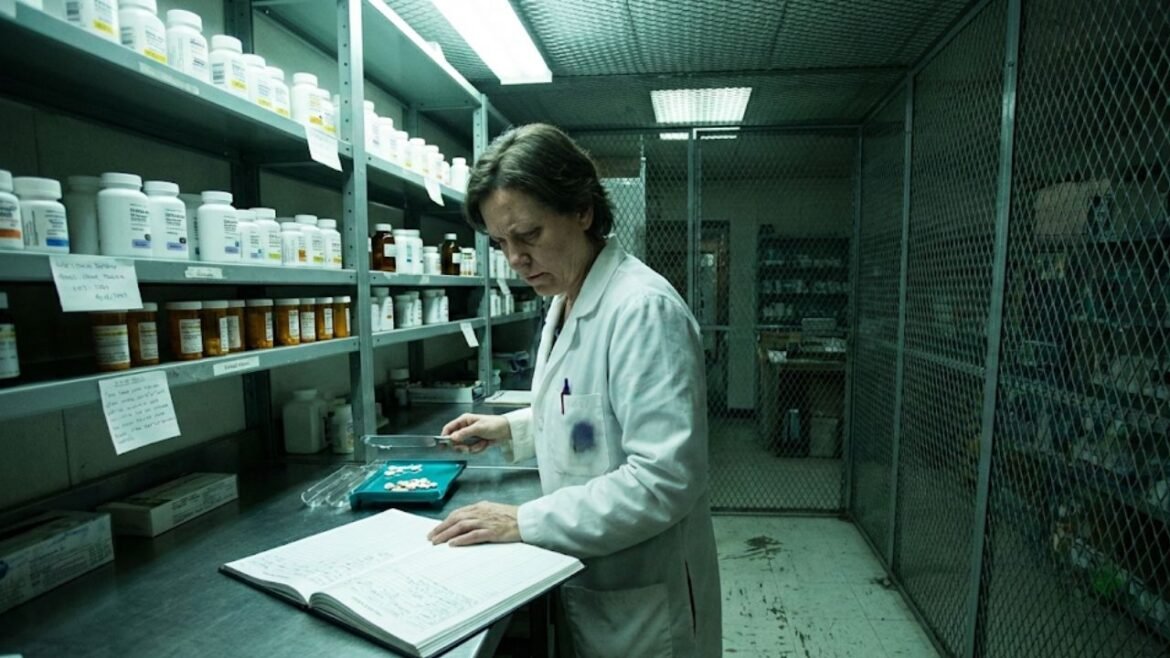
In the back of every pharmacy, there is a locked cabinet. Sometimes it is a massive steel safe; sometimes it is a caged room with a double lock.
This is where the “Controls” live. These are the drugs that the government watches: Oxycodone, Adderall, Morphine, and more.
To a customer, getting these filled seems like a hassle. But inside the pharmacy, managing this cage is a military operation. The slightest math error here doesn’t just mean a reprimand; it triggers a federal investigation. This intense responsibility is often the most surprising part of an online pharmacy technician course. You aren’t just learning to count; you are learning to guard a vault.
Understanding the “Schedules” (The Danger Ladder)
Not all drugs are created equal. The FDA and DEA rank them by how addictive they are. We call these “Schedules.”
- Schedule I: Illegal street drugs (Heroin). You won’t see these.
- Schedule II (C-II): The heavy hitters (Morphine, Ritalin). These are the most strictly guarded legal drugs in America.
- Schedule III-V: Lower risk, but still controlled (Tylenol with Codeine, Xanax).
As a technician, you have to know these ranks by heart.
Handling protocols change completely when dealing with a C-II. Unlike a common blood pressure script, these controlled substances are never left unattended on the pharmacy bench. Any lapse in physical control over the bottle is a major compliance violation that triggers an immediate internal audit.
The Law of the Perpetual Inventory
Maintaining a ‘Perpetual Inventory’ is a mandatory requirement for all scheduled medications. This system requires that the physical count of every pill in the cabinet matches the logbook at all times.
If the computer says you have 1,402 pills in the safe, and you count 1,401, nobody goes home. You have to check the trash. You have to check the dispensing logs. Check the security footage. Everywhere and everything.
And this is why accredited pharmacy technician training program curricula spend weeks on “Pharmacy Law.” From there, you learn the discipline of “Back-Counting.” Before you pour a single pill for a patient, you count what is left in the stock bottle to make sure it matches the log. If you don’t catch the error before you pour, you own the error.
Spotting the “Red Flags”
A technician is also the first line of defense against diversion (people trying to get drugs for recreational use).
You learn to look for specific clues on a prescription paper.
- Is the handwriting too perfect? (Doctors usually have bad handwriting; forgers use computer fonts).
- Is the patient paying cash for a wildly expensive painkiller?
- Is the patient from three counties away?
This is called “Corresponding Responsibility.” Even though the doctor wrote it, if you fill a fake prescription, you are liable too. You have to develop a gut instinct for when something feels “off.”
The Paper Trail (DEA Form 222)
You don’t just order these drugs online like office supplies. You use a specific government document called a DEA Form 222.
It is a triplicate form with serial numbers. If you spill coffee on it, you can’t just throw it away. Federal law requires that every serialized form be accounted for. So, these must be kept on file for a minimum of two years, regardless of their condition, to ensure there are no gaps in the official ledger.
The Accountability Standard
Dealing with controlled substances requires a pharmacy technician to care about the patient, but be obsessed with the accuracy of their records.
It is stressful, yes. But there is a pride in it, as you are the one making sure these scripts go to the actual patients they were written for, not some dealers who want to sell them off.