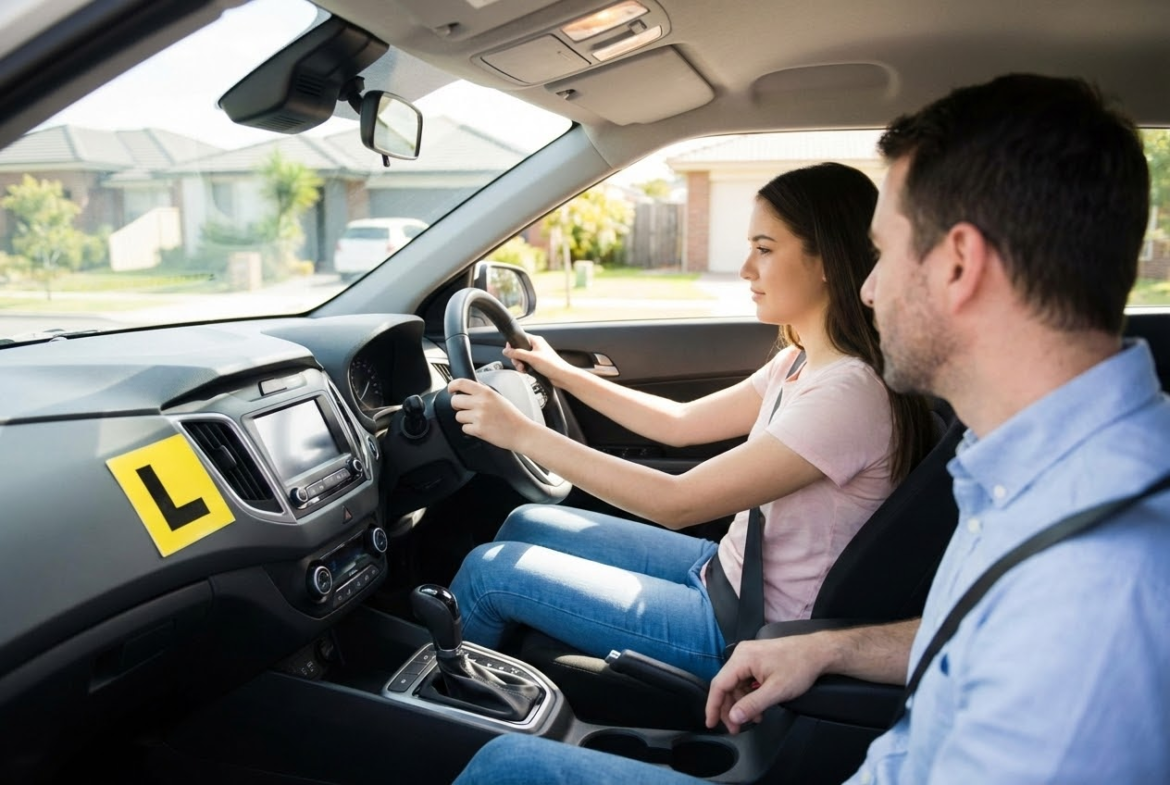
Automatic transmission vehicles have become increasingly prevalent in modern driving, making automatic driving lessons an attractive option for learner drivers seeking simpler initial driving experiences. Unlike manual transmissions, which require constant clutch and gear manipulation, automatic vehicles handle transmission management automatically, allowing learners to concentrate on steering, braking, acceleration modulation, and fundamental driving principles without the simultaneous demands of gear selection.
Many new drivers find automatic driving lessons less overwhelming than manual transmission instruction. By eliminating clutch control challenges and gear selection decisions, automatic lessons enable learners to develop core driving competencies vehicle awareness, hazard perception, smooth acceleration and braking, and appropriate turning technique without having to manage transmission complexities at the same time.
Advantages of Learning about Automatic Transmissions
Automatic driving lessons offer several practical advantages for learner drivers. Simplified vehicle control enables faster skill development in fundamental driving techniques. Reduced cognitive load during lessons means learners can dedicate full attention to road awareness, hazard identification, and defensive driving principles rather than dividing concentration between transmission management and driving observation.
Automatic driving lessons also enable learner drivers to gain confidence more rapidly. Many learners feel overwhelmed managing multiple simultaneous tasks—watching traffic, controlling steering, managing acceleration, and operating clutch and gears. Eliminating transmission complexity allows earlier achievement of smooth driving capabilities and improved confidence progression.
Differences Between Manual and Automatic Driving
Understanding transmission differences helps learners approach automatic driving lessons appropriately. Manual transmission requires deliberately selecting gears, coordinating clutch disengagement with gear engagement, and managing engine revolutions per minute (RPM) through gears. This continuous management demands significant learner attention and develops specific skill sets.
Automatic transmissions manage gear selection automatically based on vehicle speed and throttle position. Learners simply modulate acceleration using the gas pedal, with transmission responding automatically to speed demands. This simplified control model proves less demanding for learners developing fundamental driving skills.
Course Structure and Progression in Automatic Driving Lessons
Quality automatic driving lessons typically follow structured progressions. Initial lessons develop fundamental vehicle control—steering responsiveness, acceleration feel, braking modulation, and general vehicle handling. Learners become comfortable with pedal positioning, turn signal operation, and basic mirror checking without transmission management distractions.
Subsequent lessons progress to more complex environments—busier streets, higher-speed driving, parking techniques, defensive driving strategies. Progressive complexity enables learners to master fundamental skills before encountering increasingly demanding driving situations. Structured progression builds confidence while developing comprehensive driving capabilities.
Preparation for Automatic Vehicle Driving Tests
Australian licensing authorities recognise both automatic and manual transmission driving tests. Learners completing automatic driving lessons typically prepare for automatic transmission driving tests rather than manual tests. This approach maintains consistency—learners practice on the vehicle type they’ll drive during testing.
Some learners pursue automatic testing with the intention to upgrade to manual capability later, while others plan exclusively automatic driving. Understanding licensing requirements and personal intentions helps learners and instructors maintain appropriate focus during automatic driving lessons.
Cost Considerations for Automatic Driving Lessons
Automatic driving lessons typically cost about the same as manual transmission lessons, as instructor time and expertise are the primary cost factors rather than vehicle transmission type. However, some learners find automatic lessons enabling faster progression toward test readiness, potentially reducing total lesson requirements and overall expenses.
This efficiency consideration—completing sufficient automatic-driving lessons to achieve test readiness faster sometimes results in lower total costs than manual transmission learners, who struggle with gear and clutch management alongside fundamental driving skill development.
Finding Quality Automatic Driving Lessons
Selecting a reputable automatic driving instruction provider is crucial for effective learning. Research instructor credentials, experience with automatic transmission training, student testimonials, and teaching methodologies. Quality instructors recognise learner needs for structured progressions, patient skill development, and confidence building through positive feedback and achievement recognition.
Automatic driving lessons benefit from instructors who understand adult learning principles, adapt teaching to individual learner styles, and create safe, encouraging learning environments. Personality compatibility between instructor and learner significantly impacts lesson effectiveness and overall learning satisfaction.
Addressing Common Challenges in Automatic Driving Lessons
Even with automatic transmission simplicity, learner drivers encounter predictable challenges. Some learners struggle with brake sensitivity or develop jerky acceleration patterns. Others initially over-steer or under-steer in turning situations. Quality instructors address these technical issues through patient correction, demonstration, and structured practice enabling skill improvement.
Nervousness during automatic driving lessons affects many learners despite the simplicity. Patient, supportive instructors who provide encouragement alongside constructive feedback help learners manage anxiety while maintaining focus on skill development. Recognising nervousness as normal and manageable helps learners build confidence progressively.
Progressing Beyond Automatic Driving Lessons
Many learners completing automatic driving lessons later develop interest in manual transmission capability. The core driving skills developed during automatic lessons hazard perception, vehicle control, defensive awareness—transfer directly to manual learning. Learners who master automatic driving typically progress to manual transmission relatively quickly, building on established fundamental capabilities.
Some learners prefer remaining exclusively automatic drivers, particularly for urban commuting or personal vehicle preferences. Either choice proves valid automatic driving lesson completion provides full licensure capability and independent driving confidence.
Conclusion
Automatic driving lessons provide effective, accessible pathways helping learner drivers develop core driving competencies without simultaneous transmission management complexity. By focusing on fundamental vehicle control, hazard awareness, and defensive driving principles, automatic driving lessons build confidence and capability enabling test success and independent driving. Quality instruction, structured progression, and patient instruction enable learners to achieve driving competency and licensing success through streamlined, less overwhelming automatic transmission learning experiences.