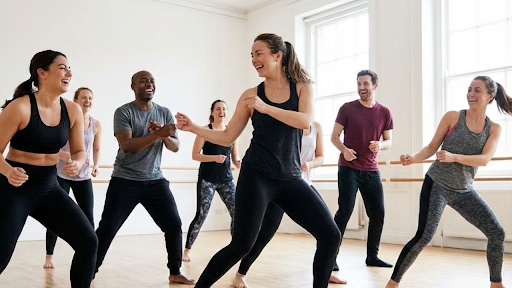
Dance classes for adults deliver comprehensive wellness benefits combining physical conditioning, social connection, cognitive stimulation, skill mastery, stress reduction, and career enhancement, suitable for all fitness levels and schedules.
Dance classes for adults develop coordination, balance, rhythm awareness, partner communication, performance confidence, and social grace, creating meaningful lifestyle enhancement through partner, solo, and group formats.
Understanding class formats, progression pathways, modification strategies, injury prevention, and integrated benefits supports optimal participation and maximizes physical, mental, and social outcomes across life stages.
Physical Fitness Conditioning Components
Cardiovascular endurance builds through continuous aerobic movement patterns improving heart health. Core strength development stabilizes partner work preventing injury during turns. Lower body toning enhances muscle definition naturally through rhythmic contractions. Flexibility improves through dynamic stretching sequences increasing range of motion. Balance training reduces fall risk improving daily stability preventing accidents.
Neurological and Cognitive Enhancement
Rhythm processing strengthens auditory-motor coordination pathways enhancing brain plasticity. Spatial awareness develops through partner navigation challenges improving orientation. Memory retention improves retaining choreography sequences boosting recall. Executive function enhances through multi-tasking movement execution sharpening focus. Stress reduction lowers cortisol levels therapeutically improving sleep quality.
Social Connection and Community Building
Partner rotation exercises build communication skills organically fostering empathy. Group formations foster belonging sense naturally combating isolation. Performance sharing creates achievement celebration opportunities building bonds. Confidence growth supports social interaction expansion beyond studio. Stress relief facilitates meaningful connections therapeutically reducing loneliness.
Skill Progression Learning Pathways
Beginner foundations establish fundamental coordination patterns building success momentum. Intermediate development refines styling sophistication creatively expressing personality. Advanced mastery explores complex choreography artistically pushing boundaries. Performance opportunities showcase progress publicly building lasting confidence through applause.
Class Format Diversity Options
Partner dance formats develop connection communication skills enhancing relationships. Solo choreography builds individual artistic expression boosting self-esteem. Technique refinement classes perfect movement quality precisely achieving mastery. Social practice nights apply learned skills confidently transitioning to real events. Performance team preparation creates showcase opportunities fulfilling competitive desires.
Age-Appropriate Modification Strategies
Joint-friendly low-impact variations protect existing conditions enabling lifelong participation. Intensity progression prevents overexertion injuries matching current fitness. Rest integration maintains sustainable participation preventing burnout. Modification teaching empowers confident adaptation without embarrassment. Medical clearance guidance ensures safe engagement consulting physicians.
Injury Prevention Technique Integration
Proper alignment prevents repetitive strain injuries through posture awareness. Muscle engagement supports endurance preventing fatigue collapse mid-class. Progressive intensity builds capacity gradually avoiding weekend warrior injuries. Warm-up protocols prepare body safely increasing blood flow. Cool-down stretching prevents soreness maintaining weekly consistency.
Mental Health Therapeutic Benefits
Endorphin release reduces depression symptoms naturally elevating mood sustainably. Social support buffers stress responses effectively through community validation. Achievement milestones build self-efficacy progressively combating imposter syndrome. Routine structure provides stability therapeutically anchoring chaotic schedules. Creative expression facilitates emotional processing healthily releasing inhibitions.
Career and Professional Applications
Networking opportunities connect like-minded adults professionally expanding circles. Leadership roles develop through choreography teaching enhancing resumes. Performance skills transfer to public speaking confidence commanding attention. Time management discipline enhances productivity balancing commitments. Discipline cultivation supports personal development consistently across life domains.
Long-Term Participation Sustainability
Graduated intensity prevents burnout maintaining engagement through plateaus. Skill mastery motivation sustains long-term commitment preventing dropout. Social bonds strengthen retention rates significantly through friendships. Performance goal setting directs progression purposefully maintaining excitement. Variety introduction prevents plateau stagnation rotating styles seasonally.
Conclusion
Dance classes for adults integrate physical conditioning, cognitive enhancement, social connection, skill mastery, injury prevention, mental health benefits, and professional development creating comprehensive wellness improvement across multiple life domains sustainably. Structured progression, diverse formats, age-appropriate modifications, therapeutic applications, and long-term sustainability support meaningful lifelong participation delivering sustained health, confidence, relationships, and joy effectively regardless of starting age or fitness level.