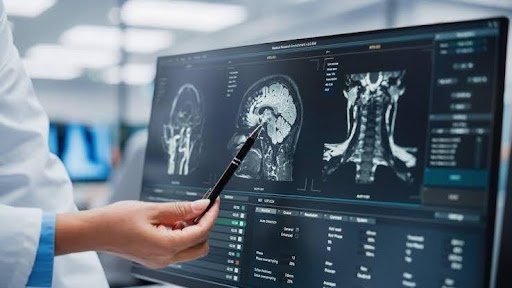
Scans can identify a health problem before symptoms become severe, but they are not a universal way to search for every possible condition. The decision to image usually depends on a person’s symptoms, examination, medical history, risk factors or an established screening programme. The important point is that an earlier image can be useful when there is a clear reason to look, not because more testing is always better.
A clinician may recommend medical imaging services when a change is difficult to assess from the outside or when knowing what is happening internally could affect the next decision. The scan may help confirm a suspected cause, rule out certain possibilities, or show the extent of a known problem. The value comes from matching the examination to a specific clinical question.
Some internal changes can be visible on imaging before they cause major outward signs. This can matter because the size, location or spread of a finding may influence monitoring or treatment. Earlier information may also provide a baseline for future comparison. However, an image cannot predict exactly how every finding will behave, and not every change seen on a scan requires treatment.
Earlier detection is useful when the finding is one that can be acted on or monitored in a meaningful way. Finding something sooner does not always change treatment, and some abnormalities never become a major health problem. This is why clinicians weigh the likely benefit of looking earlier against the chance of creating unnecessary follow-up.
This is why the report is interpreted with clinical information. A radiologist describes relevant imaging findings, while the referring clinician considers what those findings mean for the individual patient. Medical imaging services contribute evidence, but the final care plan may also depend on examination findings, laboratory results, previous history and the patient’s overall condition.
People sometimes use the word screening to describe any scan done before severe symptoms appear. In healthcare, organised screening generally has defined eligibility and a purpose. Diagnostic imaging is different because it is requested to investigate a concern, symptom or known condition. A person with mild or early symptoms may still have a diagnostic scan even though the problem has not become severe.
These distinctions matter because unnecessary testing can create its own problems, including findings that need further assessment even when they are unrelated to the original concern. The appropriate balance depends on the examination and the clinical situation. Patients should follow advice from their treating team rather than seeking repeated scans simply for reassurance.
An early scan is often useful when it leads to an appropriate next step. The result may reassure the clinician that no concerning imaging feature was identified, support treatment, prompt another test, or establish a point for later comparison. A result that needs follow-up should be discussed with the referring doctor so the timing and purpose are clear.
Patients can also ask what the scan is expected to clarify and what would happen after each possible type of result. That conversation makes the purpose of testing easier to understand. It also helps distinguish a scan ordered to investigate an early warning sign from a test performed as part of an established monitoring or screening pathway. The timing is important, but the reason for the test remains central.
Medical imaging services therefore play a targeted role in earlier detection. They can reveal internal information at a stage when a problem is not yet obvious from the outside, but their usefulness depends on why the scan was ordered and how the result is interpreted.